‘Children Must be taught HOW to think, not WHAT to think’ Margaret Mead
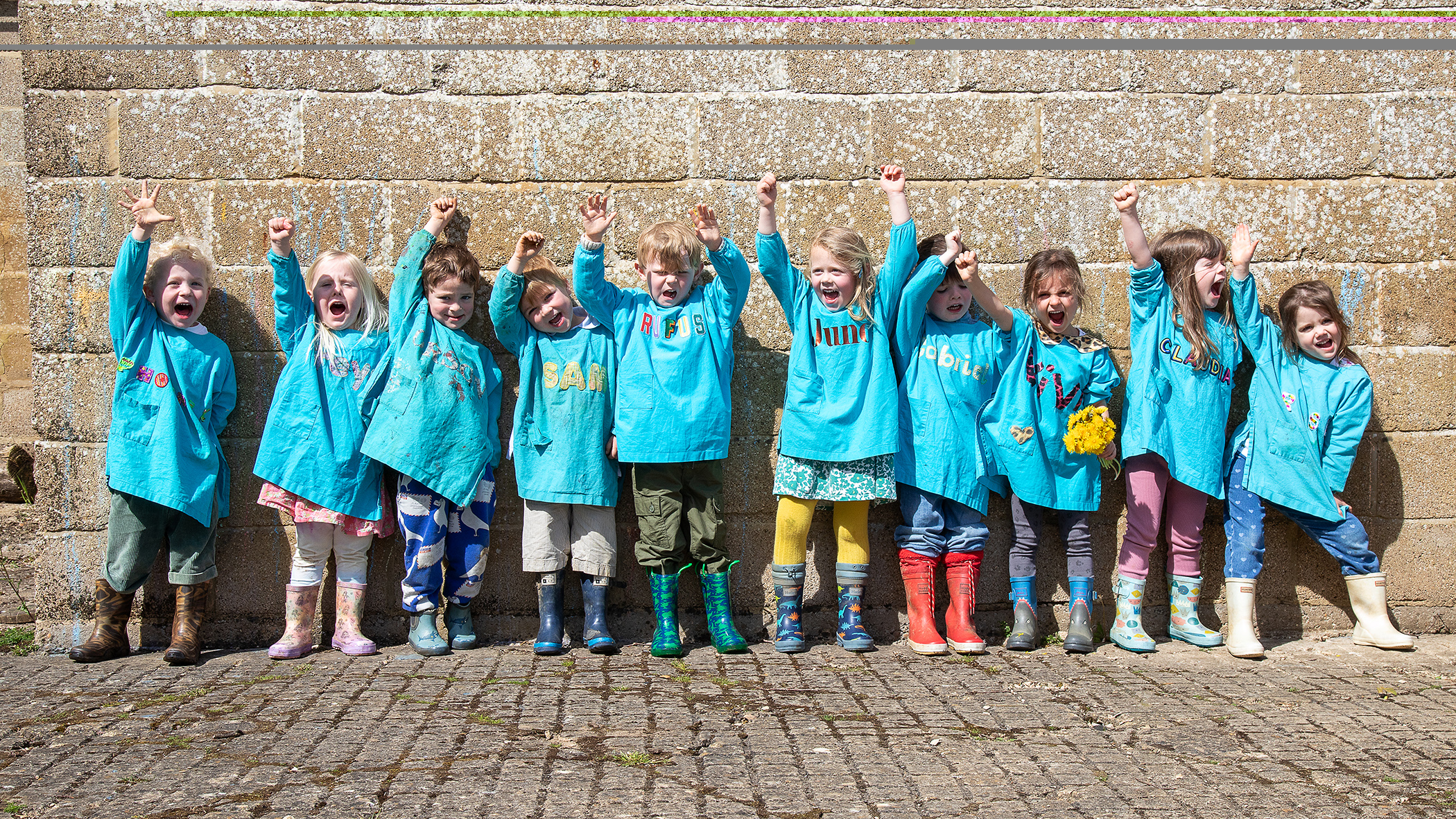
We want The Willow On The Farm children to learn at their own pace; to learn through play and curiosity and to learn through shared experiences.
The children are taught through a combination of traditional teaching and Montessori methods and we follow the EYFS Curriculum (see below) throughout.
It has been proven that children thrive when given plentiful access to stimulating outdoor environments. They learn best through involvement in play activities that are meaningful to them and build on their current knowledge, curiosity, enthusiasms and interests.
Part of the outdoor learning ensures that we instil a sense of responsibility in the children for their environment and sustainability, discussing how we look after the natural world around us and discussing aspects like recycling, use of plastics, saving energy, collecting water, making composting stations and encouraging wildlife (making hedgehog houses, wild bee houses and bird feeders).
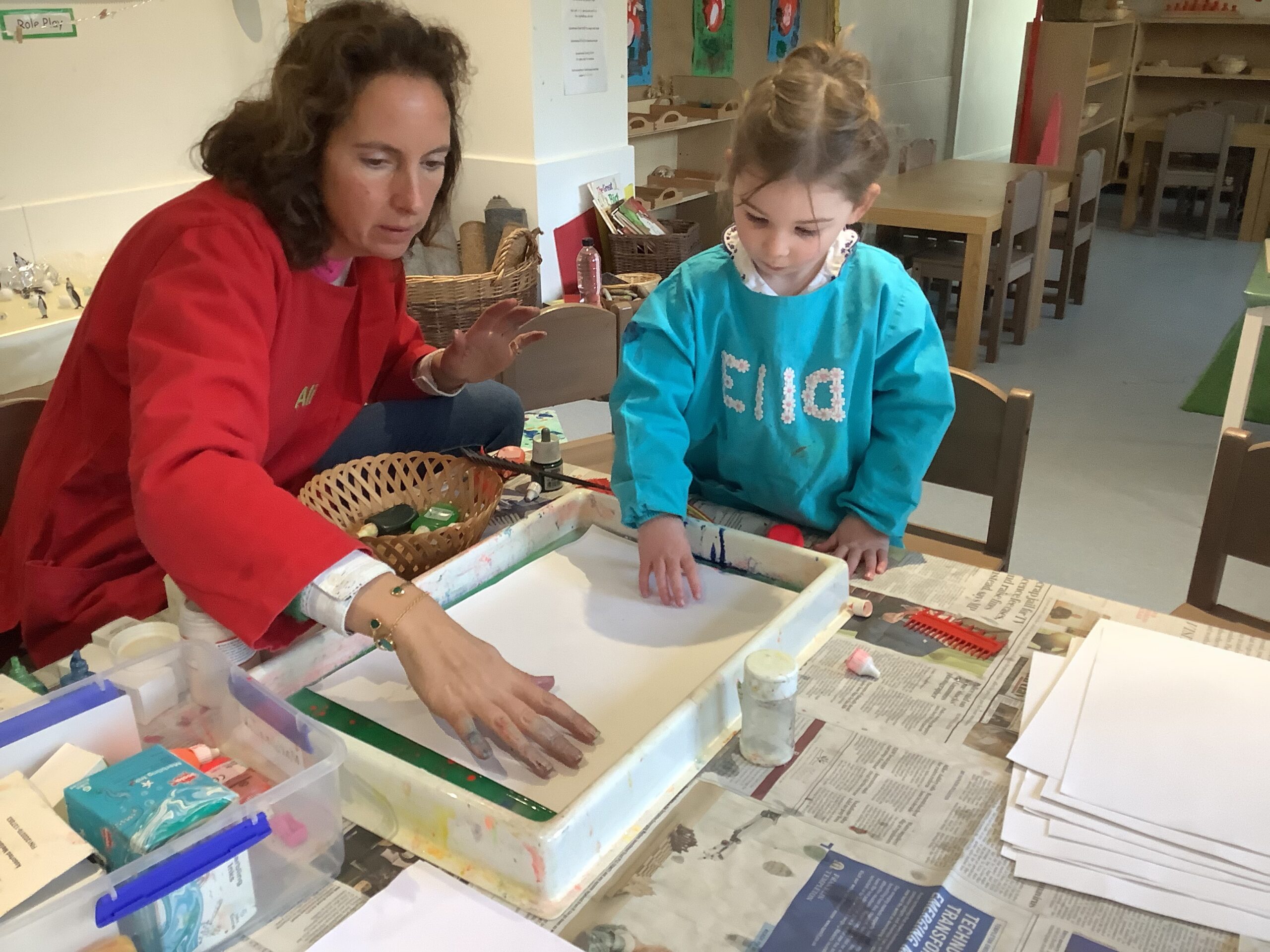


- The Willow Nursery encourages children to explore their learning environment on their own or with a skilful teacher who is trained to give guidance or intervene.
- The children are encouraged to use their imagination to play, investigate and explore surroundings using a vast range of open-ended resources and environments.
- Seeing the children as active learners we stimulate their learning by tuning into their interests and planning round them which then helps map out ‘next steps’.
- Guided with open-ended questions where necessary, the children should think and create critically – asking questions and developing their problem-solving skills.


Communication and Language
The way your child listens and understands what is being said is key to developing vocabulary and speech. Children do this by listening, watching and imitating, joining in with rhymes, stories and games using sounds and words.

Personal and Social Development
Developing a wide range of social skills and using our RULER program, will give your child the confidence to manage their feelings and behaviour, make friends, share and take turns. We create a fun, vibrant environment where their personal, social and emotional development thrives.

Physical Development
Developing gross motor skills through activities such as Forest School, Gym and Dance, helps to improve coordination, control and movement and fine motor skills such as holding a pencil or scissors, using tweezers or moulding mud and clay.

Literacy
Introducing letters through numerous activities and reinforcing the phonetic alphabet through letter of the week and group/individual phonic sessions, your child learns to link sounds and letters and to begin to read and write.

Mathematics
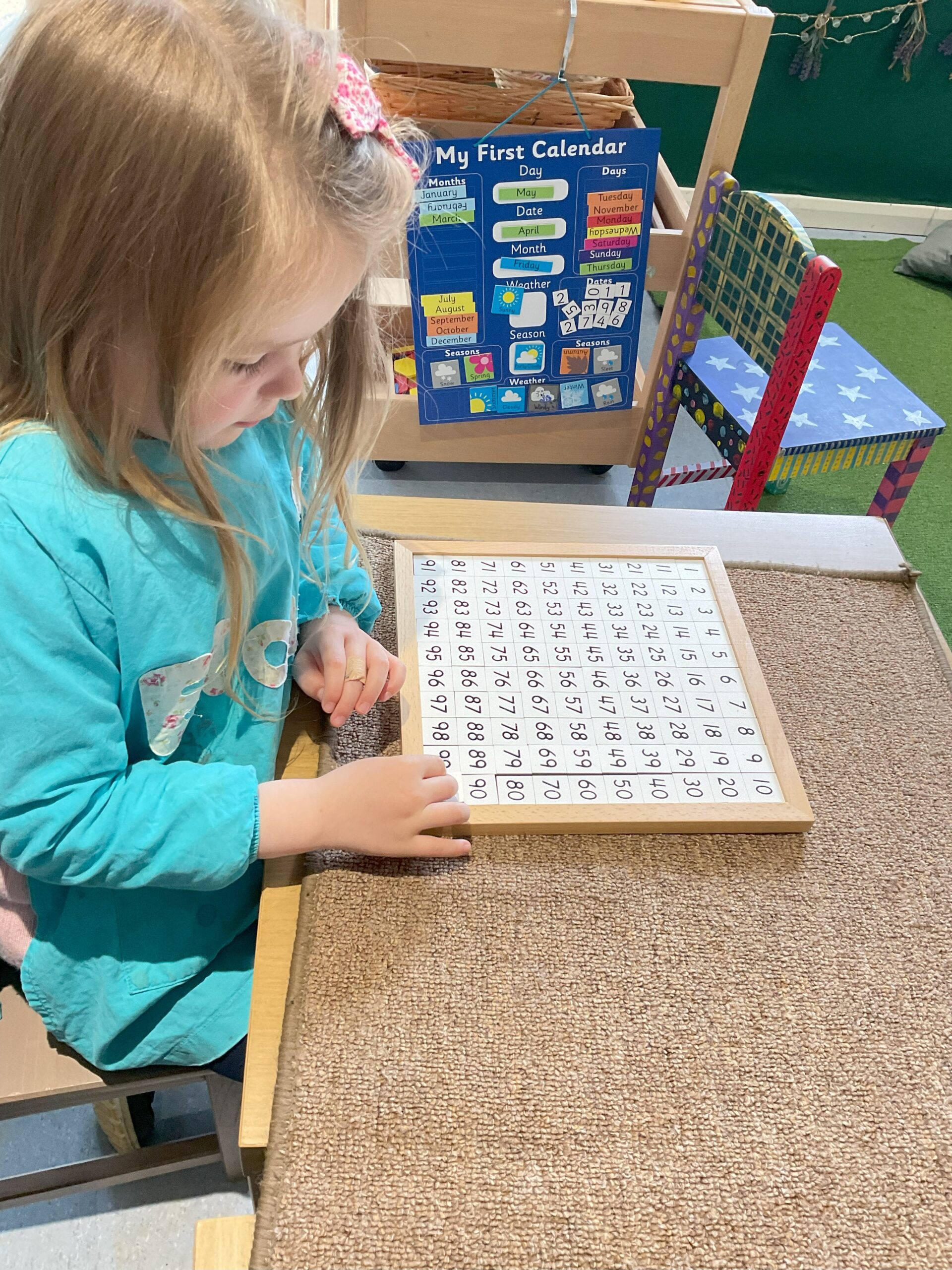
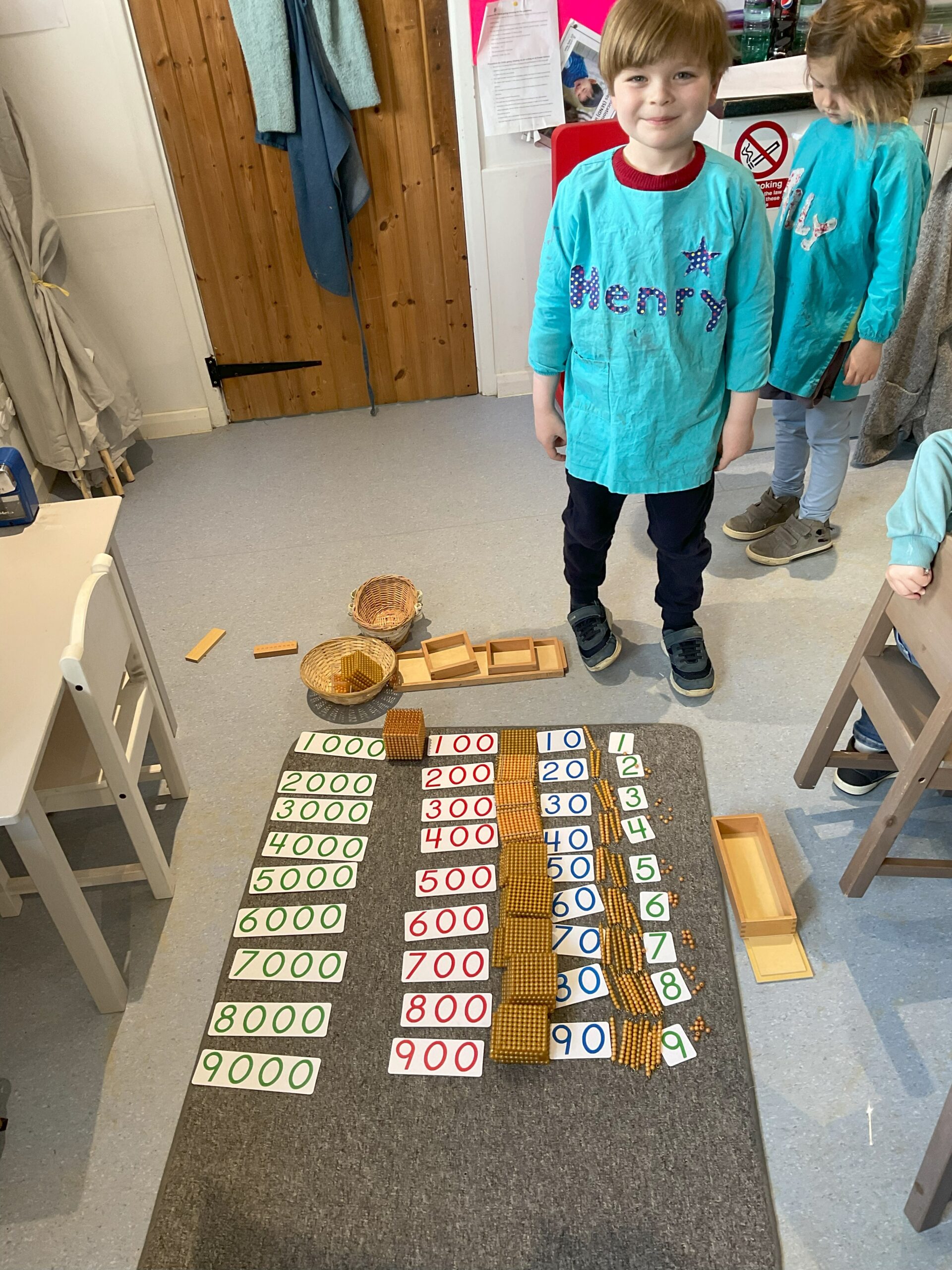
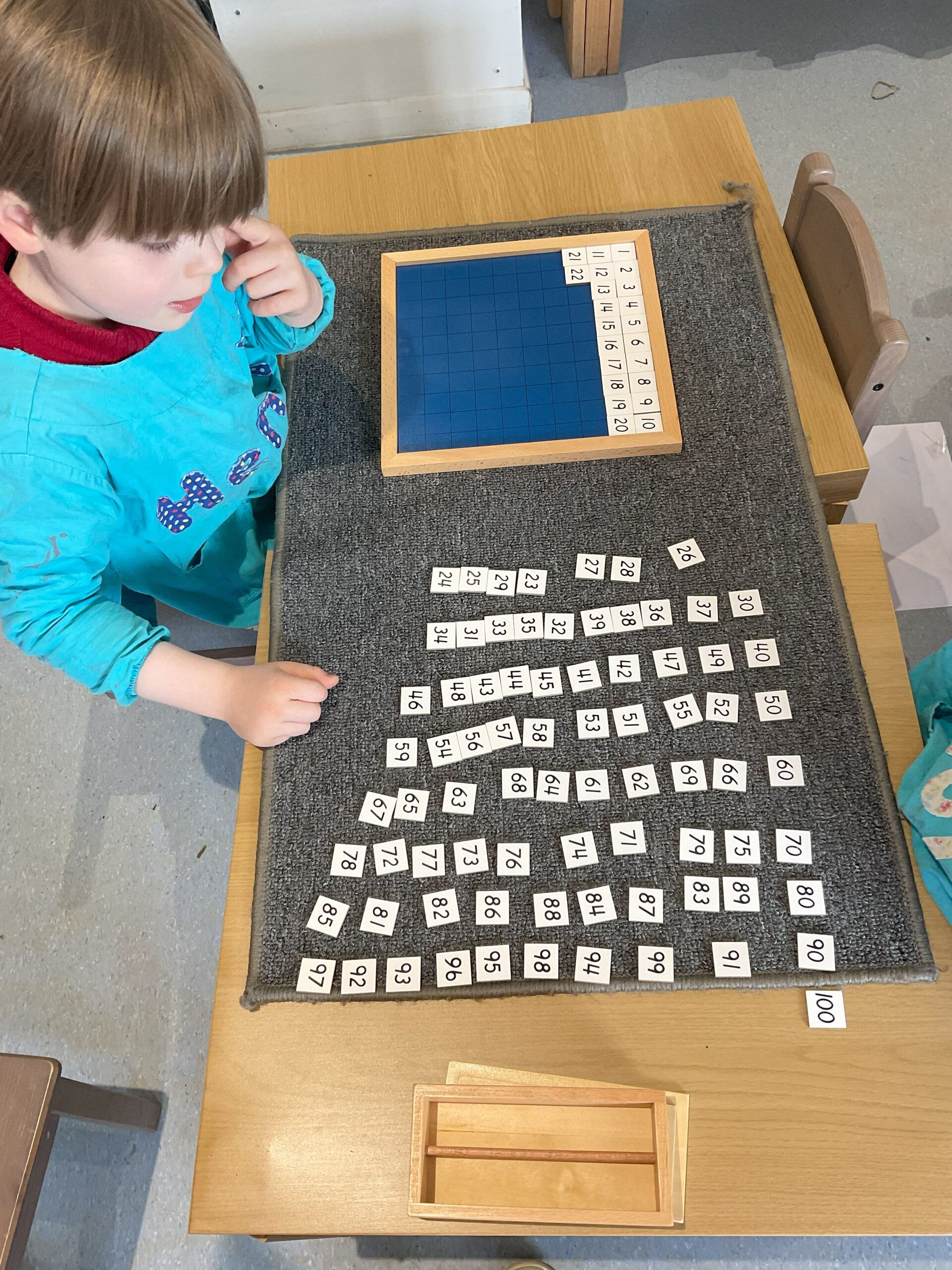
Learning mathematics through fun by understanding shape, space, measures, numbers and problem and puzzle solving. Learning at their own pace through one-to-one teaching and group activities.

Expressive Art and Design
Creativity in art, craft, drama and performing, singing, dancing, making music, cooking and imaginative play can be structured activities or child led.

Understanding the World
We invite friends, family and professionals in to share their stories whether they are florists, bee keepers, soldiers, nurses, doctors, owl tamers, vicars or from another country or culture. Our termly topics include themes which encourage understanding of the world around them eg Around the World on our Magic Carpet, The Environment Around Us, Minibeasts and People who Help us. Our daily lives co-exist with the farm, and all that is done to nurture its livestock and crops.
‘There is no such thing as bad weather, just inappropriate clothing’!
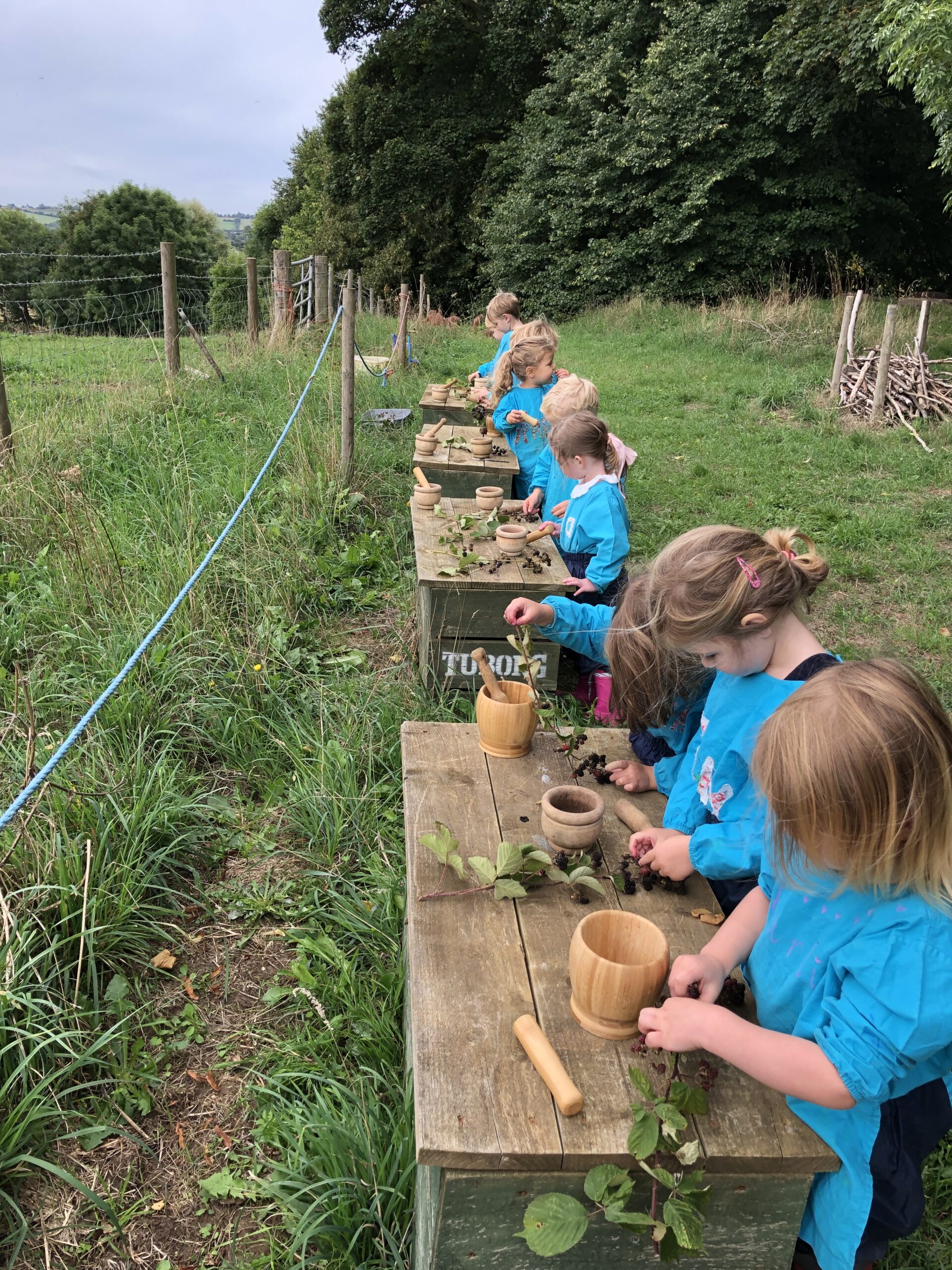
By learning outside the classroom, we support the development of healthy and active lifestyles by offering opportunities for physical activity, freedom and movement, and promoting their sense of well-being. We will give them ‘hands-on’ contact with the natural world, enabling them to see, hear, taste, touch and smell the world around them.
We use our RULER technique throughout the outdoor learning as it offers great opportunities for the children to talk about how things make them feel such as brave, proud, anxious or cooperative. As they encounter new experiences and by ‘giving things a go’ taking risks, not giving up and being proud of their achievements the children build enormous resilience and self-confidence.
Part of the outdoor learning ensures that we instil a sense of responsibility in the children for their environment and sustainability, discussing how we look after the natural world around us and discussing aspects like recycling, use of plastics, saving energy, collecting water, making composting stations and encouraging wildlife (making hedgehog houses, wild bee houses and bird feeders).
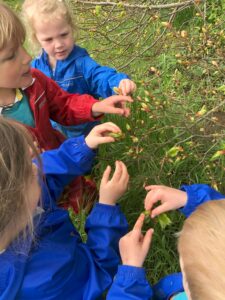


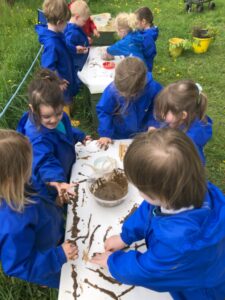
A short walk from the classroom is our own Forest School, situated at the top of the farm in a glorious spot with its own fire pit, bug hotel, climbing frames and an indoor area for particular activities.
For more information about the principles of Forest School https://www.forestschoolassociation.org/what-is-forest-school/
Our Forest School-Trained Leader will guide the children through their outdoor topics and activities, covering all 7 areas of learning. They will explore their environment, experiment, solve problems and experience opportunities to develop their imagination, inventiveness and resourcefulness! Children will often be less inhibited outside and more willing to join in with activities.
As part of their Forest School experience your child will learn to take risks safely, learning that failure is an opportunity to try again!
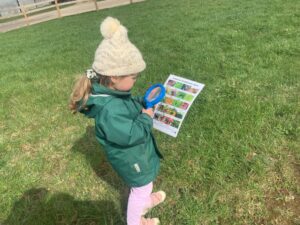
They will cover a wide and varied outdoor curriculum including the following: understanding the changing seasons and weather patterns; growing their own flowers; tending to the vegetable and herb gardens; exploring the habitats of animals, birds and insects; doing science experiments such as floating and sinking; making fairy potions; nature walks and treasure hunts; story-telling and role play with ‘The Story Chest’; orientation activities; printing; rubbings; foraging; cooking; Wind Walks; making art and craft; sharing, empathising, counting, matching and sequencing; alphabet games, letters and sounds; sensory play; wind chimes; mud pies; making spiders webs; Rain Walks; bug hotels; mud slides and mud pits; camp building; tree climbing; building and construction; writing; mark-making; whittling and woodwork; making fires and sitting round the fire pit singing songs!
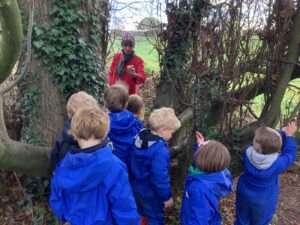
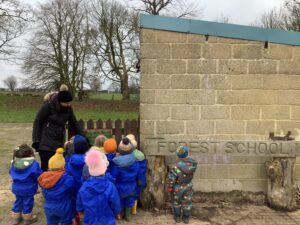


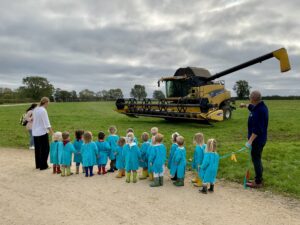
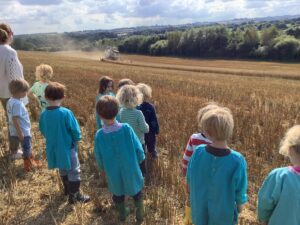
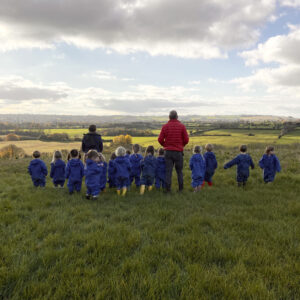
Every week we take the children on a Tractor and Trailer Adventure around the farm. One of the most exhilarating adventures is to the stream where they learn to explore safely, to experiment with water activities and do some climbing up and down the path using the rope! The children love these outings in the specially converted farm trailer, when they have the opportunity to get out and explore nature close up and to see the change in seasons; take in the wildlife and farm animals around them; the trees as they change; and begin to understand growth cycles of crops from seed to harvest and to know about the farm machinery around them.
With a high teacher/child ratio the children are under strict supervision throughout.

At The Willow On The Farm Nursery we think it is important the children encounter and feel comfortable with the farm animals and we certainly have a few of those for them to get to know!
Our cows are Marigold, Buttercup, Beautiful Sue, Floringay and Billy the Bull! Libby the horse, Tommy the pony and Woolfie our miniature Shetland which we often groom.
There is also Bessie the sheep dog, 14 chickens, 3 geese – Ding, Dong and Harold. Over the Summer we have had two resident lambs which the children bottle feed and tend to and last year we hatched out 60 chickens over three weeks in our incubator!
There are plenty of resident Swallows in our school shed and minibeasts in Forest School! Not forgetting our yearly hatchlings of chicks and caterpillars metamorphosing into butterflies!
Using our RULER skills, the children learn to respect and take great care of our animals within their environments. They collect the chickens’ eggs safely, feeding and watering them and cleaning out the runs. By instilling this sense of nurture, the children understand the importance of empathy, responsibility and compassion when caring for those dependent and more vulnerable than ourselves.